The First 10 Items Every Prepper Should Own
The First 10 Items Every Prepper Should Own
EMERGENCY PLANNINGPERSONAL CRISISNATURAL DISASTER CRISISECONOMIC CRISISPOLITICAL CIVIL UNREST CRISISSHTF CRISIS
DeVault Prepping
3/22/20263 min read
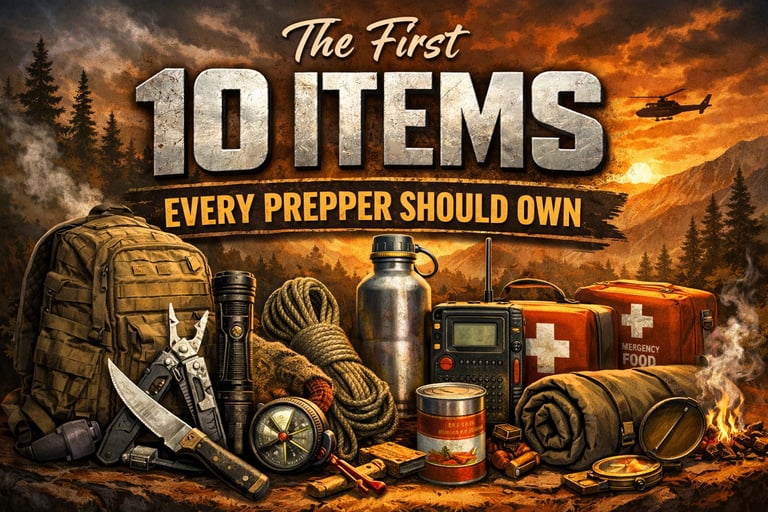
The First 10 Items Every Prepper Should Own
Preparedness isn’t about fear. It’s about reducing risk and increasing resilience. Whether the situation is a hurricane, power outage, supply disruption, or evacuation, these items form the core of a practical preparedness plan.
Throughout this blog, you’ll find links to recommended products we trust. If you purchase through these links, we may earn a commission at no extra cost to you. Your support helps us continue creating practical, no-fluff prepping content.
1. Reliable Water Storage and Filtration
Water is the first survival priority.
Humans can last weeks without food but only about three days without water.
Every household should store at least:
1 gallon of water per person per day
Minimum 3–7 days supply
Just as important is the ability to filter additional water if supplies run low.
Recommended solutions include:
These allow you to safely drink water from lakes, rivers, or collected rainwater.
2. Emergency Food Supply
Modern grocery stores run on a “just-in-time” supply chain. If trucks stop moving, shelves empty quickly.
Start with food that is:
Long shelf life
Easy to prepare
Nutritionally balanced
Good starter options include:
Aim for at least a two-week supply and expand over time.
3. First Aid and Trauma Kit
Medical care may not always be immediately available during disasters.
Every household should maintain a two-level medical setup:
Basic First Aid
Trauma Level Supplies
Tourniquet
Chest seals
These items are critical during severe injuries where minutes matter.
4. Emergency Radio
In a power outage or disaster, cell towers can fail and internet access may disappear.
A hand-crank or battery-powered emergency radio allows you to receive:
Weather alerts
Government emergency broadcasts
Evacuation instructions
Many models also include:
Flashlights
Phone charging capability
Solar charging
Communication is a survival multiplier.
5. High-Quality Flashlights and Lighting
Power outages are one of the most common emergencies.
Lighting should include:
Headlamps are especially valuable because they allow you to work, cook, or perform first aid in the dark.
Candles can be useful but should never be the primary lighting source due to fire risk.
6. Multi-Tool or Survival Knife
A strong cutting tool is one of the most versatile survival tools.
Uses include:
Cutting rope
Preparing food
Opening containers
Making repairs
Processing firewood
Multi-tools provide additional functions such as:
Screwdrivers
Pliers
Wire cutters
Small saws
A reliable blade becomes indispensable in both wilderness and urban survival situations.
7. Portable Power Source
Many critical tools depend on electricity.
Portable power options include:
These systems can power:
Phones
Medical devices
LED lighting
In prolonged outages, solar charging becomes extremely valuable.
8. Fire Starting Tools
Fire provides more than warmth.
It enables:
Cooking
Water purification
Light
Signaling
Psychological comfort
Every prepper should have multiple fire-starting methods, such as:
Lighters
Ferro rods
Waterproof matches
Redundancy matters—because when conditions are cold, wet, or windy, starting a fire becomes harder.
9. Durable Backpack or Bug-Out Bag
A strong backpack allows you to grab your essentials and move quickly if evacuation becomes necessary.
A basic bug-out bag should include:
Water and food
First aid supplies
Flashlight
Fire tools
Clothing layers
Important documents
Even if you never evacuate, having a packed bag means you are ready within minutes.
10. Emergency Shelter and Warmth
Exposure is one of the fastest killers in survival situations.
Basic shelter items include:
These tools help retain body heat and protect against rain or wind.
Even in warm climates, nighttime temperatures can drop quickly.
Building Your Preparedness Over Time
Preparedness is not something you build overnight.
The smartest approach is simple:
Start small.
Build gradually.
Improve continuously.
Many experienced preppers follow a practical progression:
72-hour emergency kit
Two-week household supply
Three-month resilience plan
Each step increases your ability to handle disruptions without panic.
A Reminder About Medical Supplies
If you have FSA (Flexible Spending Account) or HSA (Health Savings Account) funds, some emergency medical supplies may qualify as eligible purchases.
Throughout this blog you will find links to recommended gear and supplies that can help you build your preparedness plan—sometimes at excellent savings.
Using available benefits when possible is another smart way to strengthen your emergency readiness.
Final Thoughts
Preparedness isn’t about expecting the worst. It’s about being ready for whatever comes next.
Storms knock out power.
Supply chains fail.
Emergencies happen without warning.
The people who handle these situations best are usually the ones who took the time to prepare just a little ahead of everyone else.
Start with these ten essentials and build from there. Small steps today create confidence tomorrow.
If you want to explore gear that can help you build your preparedness kit, check out our recommended products here:
We receive commissions when you use the link above and it helps support our channel. Thanks so much for your help.
You can always visit our recommendations at the following two locations for any other prepping products you might need that you did not find above.
Prepping Suggestions and Recommendations
Prepping Product Recommendations from DeVault Prepping
Semper Paratus - Stay ready.
Preparedness
Empowering you to face any emergency situation.
Survival
Resources
© 2025. All rights reserved.