SHTF Event vs Natural Disaster: Key Differences
EMERGENCY PLANNINGSHTF CRISISNATURAL DISASTER CRISIS
DeVault Prepping
3/9/20262 min read
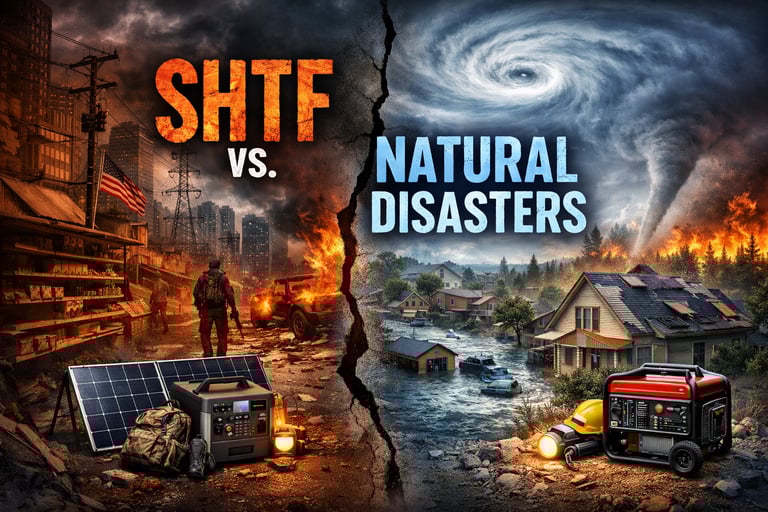
Preparedness starts with understanding what you are preparing for. Not all emergencies are the same.
Two terms you will often hear in the preparedness community are Natural Disasters and SHTF events. While both can disrupt normal life, they differ greatly in scale, duration, and recovery expectations.
Understanding these differences helps you build a smarter preparedness plan instead of a one-size-fits-none approach.
What Is a Natural Disaster?
A natural disaster is an emergency caused by environmental forces such as weather or geological activity.
Examples include:
Hurricanes
Tornadoes
Floods
Wildfires
Earthquakes
Winter storms
These events can be devastating, but they usually have three characteristics:
1. They are localized
Most natural disasters affect a region, not the entire country or world.
2. Emergency response is still functioning
Local, state, and federal agencies respond. FEMA, National Guard, and utility crews typically mobilize.
3. Recovery begins relatively quickly
While rebuilding may take months or years, basic services usually return within days or weeks.
For these situations, preparedness focuses on:
Temporary power outages
Limited supply shortages
Short-term evacuation or sheltering in place
Reliable backup power is one of the most useful tools during these events.
Recommended generators for natural disasters:
https://amzn.to/4ruYTZ6
we receive commissions when you use the link above and it helps support our channel. Thanks so much for your help.
What Is an SHTF Event?
SHTF stands for “Stuff Hits The Fan.”
In preparedness culture, it refers to large-scale societal disruption where normal systems break down.
Examples might include:
Nationwide power grid failure
Severe economic collapse
Large-scale cyber attacks on infrastructure
Major war impacting domestic systems
Long-term supply chain collapse
Government instability or breakdown
Unlike natural disasters, SHTF scenarios may involve:
1. Long-term disruption
Power, food distribution, and services may not return quickly.
2. Large geographic impact
The crisis may affect entire regions or the entire country.
3. Limited outside help
Emergency services may be overwhelmed or unavailable.
Preparation for these scenarios requires greater self-reliance.
Examples include:
Long-term food storage
Off-grid power systems
Water purification
Security planning
Medical supplies
You can see a full gear list for these scenarios here:
Full list for SHTF preparedness gear:
https://www.amazon.com/shop/influencer-5b9e08f1/list/2ACYGT1HHQQJP?ref_=cm_sw_r_cp_ud_aip_sf_list_spv_ons_mixed_d_Q586HH0D6HZDFQBF4DRF
we receive commissions when you use the link above and it helps support our channel. Thanks so much for your help.
Power: One of the Biggest Preparedness Differences
Electricity is one of the first systems to fail in almost every crisis.
For short-term disasters, a simple generator may be enough.
For long-term disruptions, solar generators become extremely valuable because they do not rely on fuel deliveries.
Recommended solar generators:
https://amzn.to/3MMkaiC
we receive commissions when you use the link above and it helps support our channel. Thanks so much for your help.
Solar systems allow you to power:
Refrigerators
Communication devices
Medical equipment
Lights
Small appliances
When fuel supplies become unreliable, solar power can keep essential systems running indefinitely.
The Smart Prepper Plans for Both
Many people think preparedness is about preparing for extreme scenarios only. In reality, the most practical strategy is preparing for both types of events.
A good rule of thumb:
Natural Disaster Preparedness
3–14 days of food and water
Emergency generator
Evacuation plan
Medical supplies
Backup communications
SHTF Preparedness
Months of food storage
Off-grid power capability
Water filtration systems
Self-defense planning
Community and mutual aid networks
Natural disasters happen every year.
SHTF events are less common but potentially far more disruptive.
Preparing for both puts you ahead of 95% of people.
Final Thought
Preparedness is not about living in fear.
It is about living with confidence knowing that if something unexpected happens, you and your family are ready.
Storms will come.
Power grids will fail.
Supply chains will break.
Prepared people face those moments with calm instead of panic.
And that peace of mind is worth every bit of preparation.
Semper Paratus (Always Ready)
Preparedness
Empowering you to face any emergency situation.
Survival
Resources
© 2025. All rights reserved.