Power Down, Stay Up: How to Prepare for a Grid-Down Scenario Before It Happens
When the power goes out, everything changes fast—and most people aren’t ready. This guide walks you through: How to identify your critical power needs What size system you actually need (and what to avoid) The difference between short-term backup and long-term energy independence Common mistakes that leave people powerless when it matters most A practical, step-by-step plan you can start this week Whether you’re preparing for storms, outages, or long-term disruptions, this strategy is designed to help you stay in control when the grid goes down. 👉 Start building your setup with trusted gear and resources: https://shop.devaultcyberplus.com/product-category/prepping-products/ https://a.co/d/06cmerdt https://www.devaultprepping.com/prepper-shop
EMERGENCY PLANNINGNATURAL DISASTER CRISISPOLITICAL CIVIL UNREST CRISISSHTF CRISIS
DeVault Prepping
5/4/20262 min read
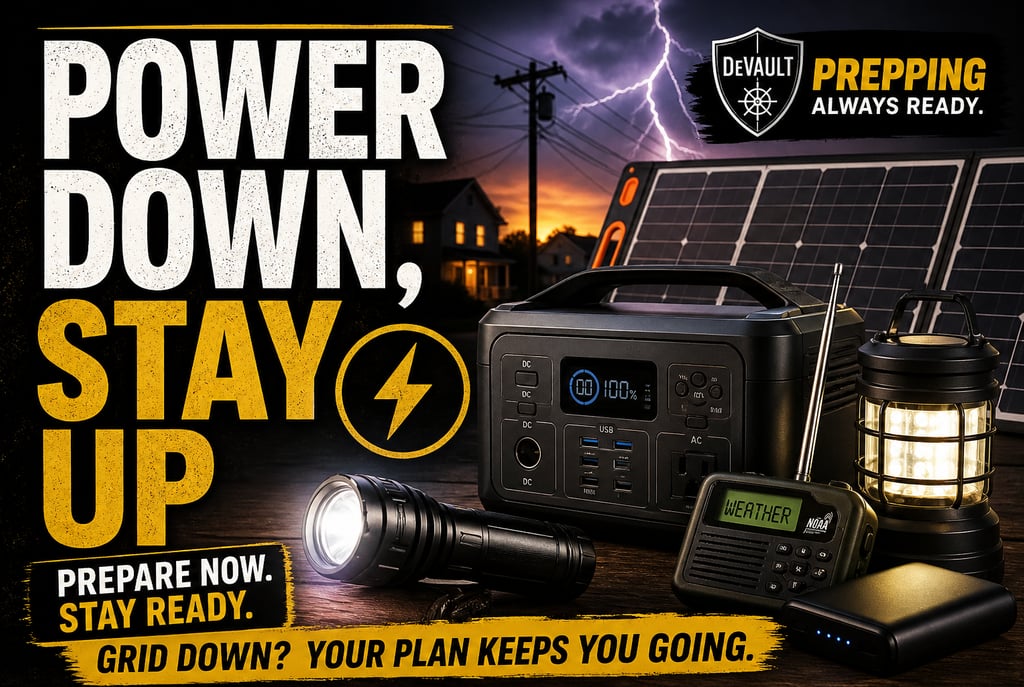
Strategic Insight (Why This Matters Now)
The grid is fragile. That’s not fear talk—it’s infrastructure reality.
Watch the YouTube video that goes with this blog @ https://youtu.be/FqYD5aEhO-M
Between extreme weather, cyber threats, and increasing demand, outages are no longer rare—they’re recurring disruptions. The difference between inconvenience and crisis comes down to one thing:
Do you have power when everyone else doesn’t?
This week’s focus: build a layered, scalable power strategy that keeps essentials running without overspending or overcomplicating your setup.
The Problem
When the grid goes down:
Food spoils within hours
Communication becomes unreliable
Medical devices stop working
Heating or cooling disappears fast
Stores get wiped out in a day
Most people rely on a single point of failure: the power company.
That’s not a plan—it’s a liability.
The Solution: Layered Power Preparedness
Think in tiers, not one oversized purchase.
Tier 1: Immediate Backup (0–24 Hours)
Battery banks (phones, radios, flashlights)
Rechargeable lighting
Portable power stations
Goal: Stay operational, informed, and mobile.
Tier 2: Short-Term Sustainment (1–3 Days)
Solar generators with panels
Fuel-based generators (gas/propane)
Power for:
Refrigerator/freezer (critical)
Medical devices
Communication gear
Goal: Preserve food, maintain health, avoid panic decisions.
Tier 3: Long-Term Independence (3+ Days)
Expandable solar panel systems
Battery storage systems
Energy-efficient appliances
Goal: Reduce reliance on fuel and maintain long-term resilience.
Execution Plan (Do This This Week)
Step 1: Identify Critical Loads
Write down what actually matters:
Fridge/freezer
CPAP or medical equipment
Phones and communication
Lighting
Everything else is secondary.
Step 2: Estimate Power Requirements
Quick reality check:
Fridge: ~600W startup / ~150W running
Phones: minimal
Lights: low draw
This defines your minimum system size.
Step 3: Start With One Solid System
Don’t try to build a full off-grid setup overnight.
Start with:
Mid-range solar generator
At least one solar panel
Then expand.
Step 4: Build Redundancy
Extra battery packs
Multiple charging options
Fuel reserve (if applicable)
If one system fails, another takes over.
Recommended Gear (Start Here)
👉 Explore recommended gear here:
https://shop.devaultcyberplus.com/product-category/prepping-products/
👉 Browse the DeVault Prepping Amazon Storefront:
https://a.co/d/06cmerdt
👉 Find additional prepper resources and gear here:
https://www.devaultprepping.com/prepper-shop
Risk Analysis (Where Most People Fail)
Common mistakes:
Buying undersized systems
No recharge plan (dead battery = dead system)
Over-reliance on fuel
Never testing gear
Fix it:
Test monthly
Run a 12-hour no-power drill
Identify weak points before they matter
Bottom Line
Preparedness isn’t about comfort, it’s about control.
When the grid goes down, your setup determines whether you’re reacting… or continuing life with minimal disruption.
Build smart. Start small. Scale intentionally.
Because when it happens—you don’t rise to the occasion.
You fall back on your preparation.
Stay ready. Stay sharp. Stay independent.
Semper Paratus (Always Ready)
A Note About Affiliate Links
Some links on this channel are affiliate links, meaning I may earn a small commission if you make a purchase after clicking — at no extra cost to you.
These funds help support the channel, allowing me to invest in new gear, production equipment, and keep things running behind the scenes. A portion also goes right back into supporting the mission.
Thank you for your continued support.
Preparedness
Empowering you to face any emergency situation.
Survival
Resources
© 2025. All rights reserved.