Building a 72-Hour Emergency Kit
A 72-hour kit (often called a go-bag or bug-out bag) is designed to sustain you and your family for three days without outside help.
EMERGENCY PLANNINGNATURAL DISASTER CRISISECONOMIC CRISISPOLITICAL CIVIL UNREST CRISIS
DeVault Prepping
3/29/20263 min read
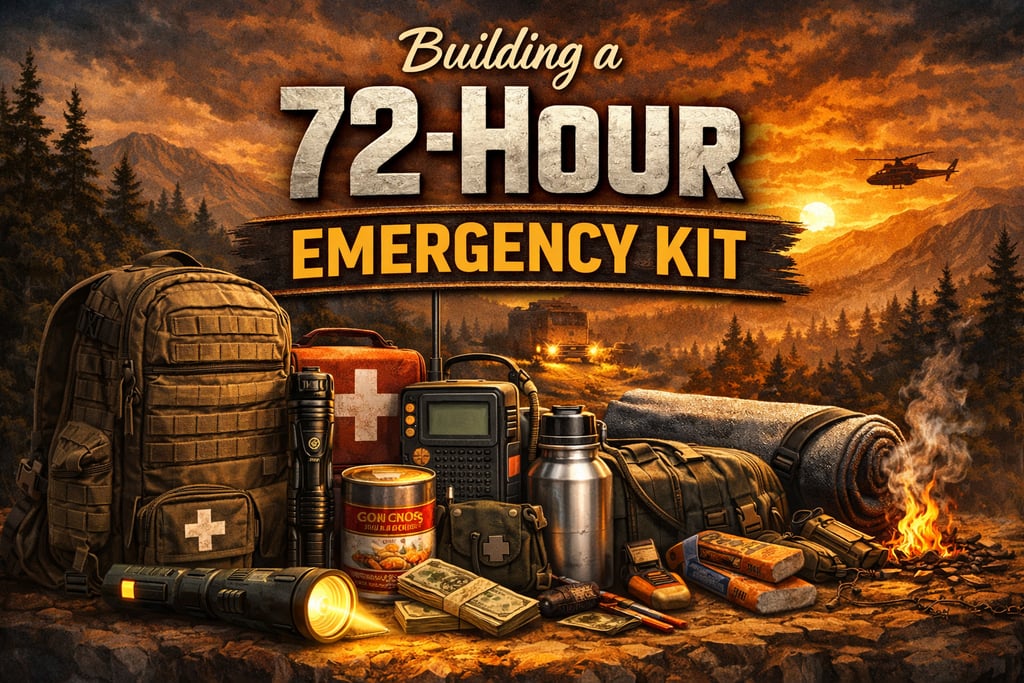
Building a 72-Hour Emergency Kit
A 72-hour kit (often called a go-bag or bug-out bag) is designed to sustain you and your family for three days without outside help.
Why 72 hours?
Throughout this blog, you’ll find links to recommended products we trust. If you purchase through these links, we may earn a commission at no extra cost to you. Your support helps us continue creating practical, no-fluff prepping content.
Because in most disasters:
Emergency services are overwhelmed
Stores are empty or closed
Power and communications may be down
Your goal is simple: be self-sufficient long enough to stabilize your situation.
The Core Principle: Solve the Survival Equation
Every emergency comes down to a few basic needs:
Water
Food
Shelter
Medical
Light & Communication
Your kit should cover each of these—efficiently and reliably.
1. Water: Your Top Priority
Start here. Always.
You need:
Minimum: 3 gallons per person
But carrying all your water isn’t always practical. So you combine:
Storage + Filtration
Include:
This gives you both immediate supply and long-term capability.
2. Food: Simple, High-Calorie, No Hassle
Forget gourmet meals. You want calories and convenience.
Choose foods that are:
Lightweight
Good options:
Canned goods (if weight allows)
Aim for 2,000–2,500 calories per day per adult.
3. First Aid and Trauma Supplies
In an emergency, small injuries can become big problems fast.
Your kit should include:
Minutes matter. These tools buy you time.
4. Lighting: Own the Darkness
When the lights go out, everything gets harder—and more dangerous.
Include:
A headlamp turns you from “blind and fumbling” to functional.
5. Communication: Stay Informed
Your phone is great—until it isn’t.
Add:
This keeps you connected to:
Emergency instructions
Situational awareness
6. Fire Starting Tools
Fire equals:
Warmth
Cooking
Morale
Include at least two methods:
Redundancy here isn’t optional—it’s survival math.
7. Shelter and Warmth
Exposure can become deadly faster than hunger.
Pack:
Even in Florida, nights can surprise you—and rain always shows up uninvited.
8. Multi-Tool or Knife
A good tool solves dozens of problems.
Use it for:
Cutting cordage
Opening containers
Making quick repairs
Preparing food
This is one of the highest utility items in your entire kit.
9. Hygiene and Sanitation
Not glamorous—but critical.
Include:
Cleanliness prevents illness when conditions are already stacked against you.
10. Important Documents and Cash
Systems fail. Cards stop working.
Keep:
Copies of IDs
Insurance info
Emergency contacts
Small cash in bills
Think of this as your backup identity and access system.
11. Clothing and Personal Items
Pack for conditions, not comfort.
Include:
Extra socks (non-negotiable) (wool socks recommended)
Weather-appropriate clothing
Gloves
Hat
Dry feet and warm layers make a bigger difference than most people expect.
Packing Strategy: Keep It Mobile
Your 72-hour kit should be:
Portable (you can carry it)
Organized (no digging through chaos)
Accessible (grab-and-go ready)
Use:
Internal pouches or compartments
Clearly labeled sections
If it takes 10 minutes to find something, it’s not a system—it’s a liability.
Where to Store Your Kit
You don’t just need a kit—you need it where you’ll need it.
Recommended locations:
Home (primary kit)
Vehicle (secondary kit)
Work (compact version)
Disasters don’t wait for you to be conveniently at home.
Budget Tip: Build It Over Time
You don’t need to buy everything at once.
A practical approach:
Week 1: Water and food
Week 2: Medical supplies
Week 3: Lighting and radio
Week 4: Shelter and tools
Preparedness is a system, not a shopping spree.
Some medical supplies in your kit may qualify for purchase using:
FSA (Flexible Spending Account)
HSA (Health Savings Account)
Throughout this blog, you’ll find links to recommended products that can help you build your kit—often at great prices.
Using pre-tax dollars when possible is just smart planning.
Final Thoughts
A 72-hour emergency kit isn’t about fear—it’s about control.
When something goes wrong, most people wait for help.
Prepared people don’t wait.
They act.
They adapt.
They stay ahead.
Start building your kit today—piece by piece—and you’ll never be caught completely unprepared again.
👉 Explore recommended gear here:
https://amzn.to/4kGmhRm
We receive commissions when you use the link above and it helps support our channel. Thanks so much for your help.
Preparedness is a mindset backed by action.
Semper Paratus (Stay Prepared)
Preparedness
Empowering you to face any emergency situation.
Survival
Resources
© 2025. All rights reserved.