72-Hour Emergency Kit Under $100
When people hear “emergency preparedness,” many picture underground bunkers, expensive gadgets, and spending hundreds or thousands of dollars. That assumption stops many people before they even begin. The reality is much simpler. A practical 72-hour emergency kit isn't about preparing for the end of the world. It’s about getting through the first three days after a power outage, severe storm, hurricane, flood, or unexpected disruption. Those first 72 hours are often where small problems become big problems. The goal isn't fear. The goal is reducing dependence and avoiding last-minute panic buying.
EMERGENCY PLANNINGNATURAL DISASTER CRISISPERSONAL CRISISPREPPING FUNDAMENTALS
DeVault Prepping
5/31/20262 min read
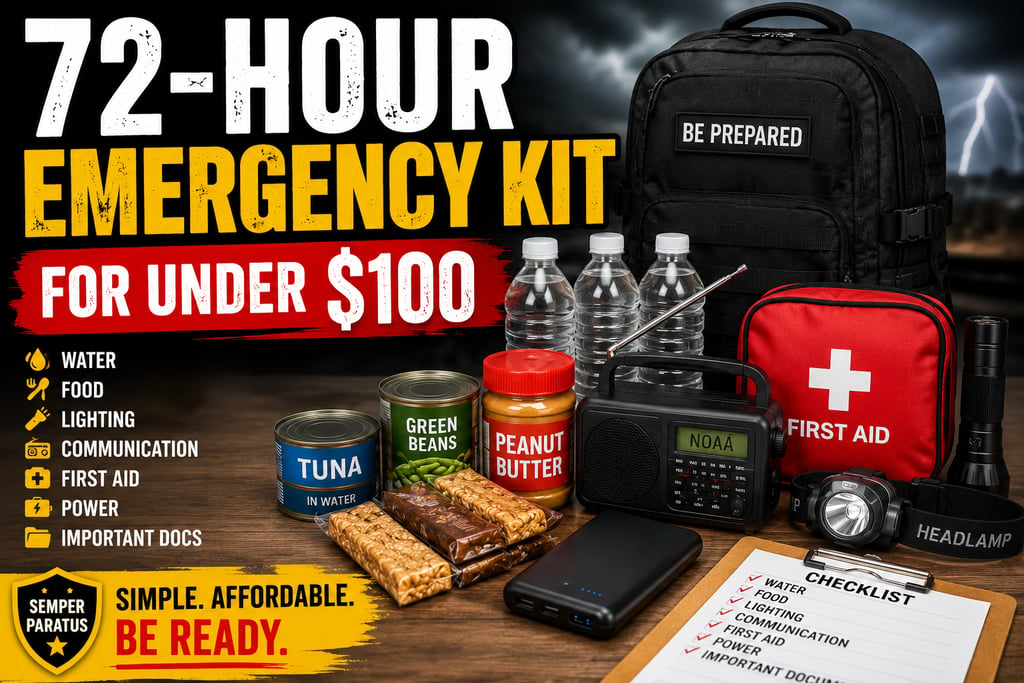
Build a 72-Hour Emergency Kit for Under $100 (Without Buying a Bunker)
When people hear “emergency preparedness,” many picture underground bunkers, expensive gadgets, and spending hundreds or thousands of dollars. That assumption stops many people before they even begin.
The reality is much simpler.
A practical 72-hour emergency kit isn't about preparing for the end of the world. It’s about getting through the first three days after a power outage, severe storm, hurricane, flood, or unexpected disruption. Those first 72 hours are often where small problems become big problems.
The goal isn't fear.
The goal is reducing dependence and avoiding last-minute panic buying.
Start With Water First
You can survive longer without food than water.
Recommended minimum:
1 gallon per person per day
Minimum 3 days supply
For one person:
3 gallons minimum
For a family of four:
12 gallons minimum
Suggested additions:
Collapsible water containers
Water purification tablets
Portable water filter
Food: Keep It Simple
Forget gourmet survival meals at the beginning.
Focus on foods you already eat:
Examples:
Peanut butter
Canned meat
Canned vegetables
Protein bars
Rice
Instant oatmeal
Crackers
Nuts
Shelf-stable milk
Aim for:
Approximately 2,000 calories per person daily
Lighting Matters
When the lights go out, people immediately realize how much they depend on electricity.
Recommended:
LED flashlight
Headlamp
Spare batteries
Headlamps earn their keep because your hands remain free.
Communication Can Matter More Than Comfort
If power and cell service become unreliable, information becomes valuable.
Recommended:
NOAA weather radio
Emergency crank radio
Portable battery bank
Receiving weather alerts can give you time to react before conditions worsen.
Basic Medical Supplies
Don't wait until an emergency to realize you're missing simple items.
Include:
Bandages
Pain relievers
Prescription medications
Antibiotic ointment
Gloves
Medical tape
Power and Charging
Small devices become important quickly.
Suggested:
Portable power bank
Solar charger
Charging cables
Important Documents
Keep copies of:
Driver's licenses
Insurance information
Emergency contacts
Medical information
Cash in small bills
Place documents in waterproof storage.
Example Budget Breakdown
Item
Estimated Cost
Water storage
$10
Food supplies
$25
Flashlight/headlamp
$15
Emergency radio
$20
First aid kit
$10
Portable charger
$15
Miscellaneous supplies
$5
Estimated total: $100 or less
Final Thoughts
Preparedness doesn't happen in one shopping trip.
Build one layer at a time.
Buy one or two items each week.
Six months from now you'll have a useful emergency kit instead of wishing you had started.
Browse preparedness products here:
https://shop.devaultcyberplus.com/product-category/prepping_products/
Download and explore more preparedness resources:
https://www.devaultprepping.com
You can also view the YouTube Video for this blog at: https://youtu.be/ZMMU7X2Mw2A
Semper Paratus (Always Ready).
Preparedness
Empowering you to face any emergency situation.
Survival
Resources
© 2025. All rights reserved.